

The Bible does not call cremation a sin or command burial as the only Christian option. Burial is the biblical norm, but cremation does not prevent bodily resurrection.
Church rules still differ, and every body and set of remains should be treated with reverence.
On this page
- 01The Bible does not forbid cremation
- 02What the Bible's burial pattern means
- 03Was anyone cremated in the Bible?
- 04Cremation does not prevent bodily resurrection
- 05Catholic, Orthodox, and Protestant views
- 06Four questions before choosing cremation
- 07If someone you love was already cremated
- 08So, is it a sin to be cremated?
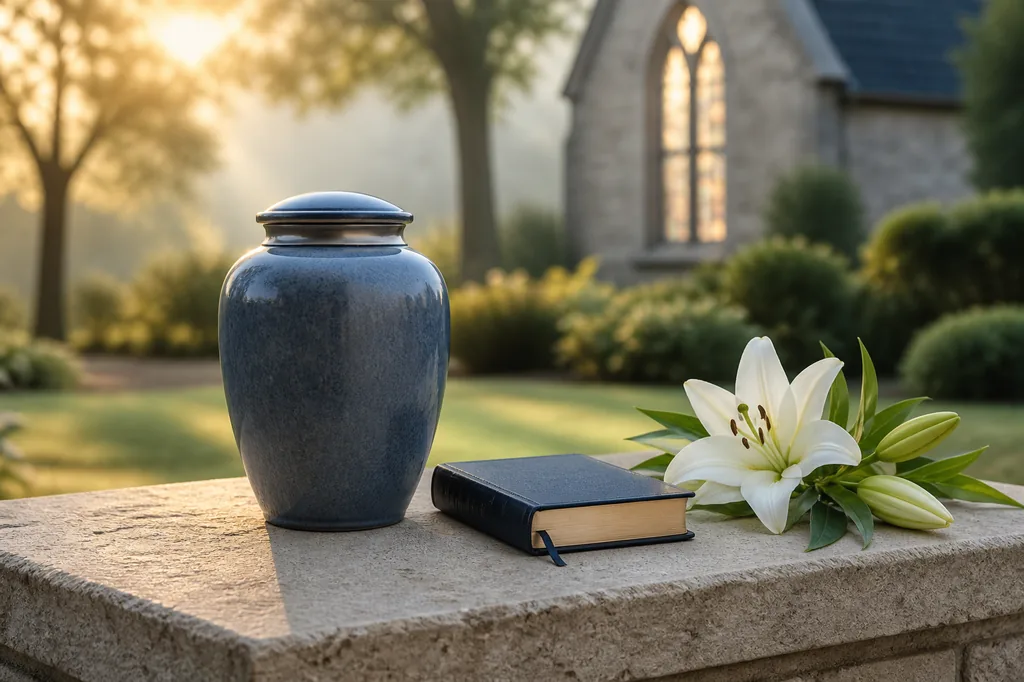
The Bible does not forbid cremation
No verse says that a Christian's body must never be cremated. Scripture does not command one funeral method for every believer, and cremation does not appear among the sins the Bible names.
That silence should not be stretched into a claim that funeral choices carry no moral meaning. The Bible treats the body as God's creation and treats the dead with care. A decision made to mock Christian hope, dishonor a person, or disregard duties to the family would raise moral questions beyond the physical process itself.
The distinction is simple: the Bible gives no general command against cremation, but it does give us a strong pattern of burial.
What the Bible's burial pattern means
Abraham bought a burial place for Sarah (Genesis 23:1-20). Jesus was laid in a tomb (John 19:38-42). Devout men buried Stephen and mourned him (Acts 8:2). Burial is the ordinary way Scripture describes the faithful caring for the dead.
Christians have also seen burial as a sign. The body is placed in the earth while the church confesses the resurrection of the dead. Paul uses the image of a seed when he explains resurrection in 1 Corinthians 15, and Jesus himself was buried before rising.
A repeated practice deserves respect, but frequency alone does not create a command. Scripture also records deaths in fire, bodies lost in war, and remains exposed or destroyed by enemies. Christian hope cannot depend on receiving an undisturbed grave.
Was anyone cremated in the Bible?
The closest example is Saul and his sons. After the Philistines killed them, displayed their bodies, and fastened Saul's body to a city wall, the men of Jabesh-gilead recovered the remains. First Samuel 31:12-13 says they burned the bodies, buried the bones under a tamarisk tree, and fasted for seven days.
This was an unusual act after mutilation and public desecration, not a description of an ordinary modern cremation. The text does not condemn the men of Jabesh-gilead. It presents them as rescuing the bodies from further shame and then burying what remained.
Other biblical passages connect burning bodies or bones with punishment, warfare, or desecration. Those passages show that fire can carry a terrible meaning in a particular act. They do not say that every cremation in every context has that meaning. Motive and treatment matter.
Cremation does not prevent bodily resurrection
Paul asks, "How are the dead raised? With what kind of body do they come?" He answers with the image of a seed: what is sown is perishable, but what God raises is imperishable (1 Corinthians 15:35-44). Resurrection is God's work of transformation, not the natural survival of an intact corpse.
Buried bodies return to dust. Some bodies are lost at sea, consumed by fire, destroyed in war, or never recovered. None of this puts a person beyond the power of the God who created life and raises the dead.
This does not make the body disposable. The body still deserves dignity, but its resurrection does not depend on its condition after death.
Catholic, Orthodox, and Protestant views
The Catholic Church permits cremation when the choice does not deny faith in bodily resurrection. It still recommends burial as the clearest sign of respect and resurrection hope. Catholic norms ordinarily call for ashes to be kept together and laid to rest in a cemetery or another sacred place rather than scattered or kept casually at home.1
Orthodox teaching is generally stricter. Burial is the norm, and many Orthodox jurisdictions discourage or prohibit voluntary cremation, sometimes allowing exceptions for law, public necessity, or another serious reason. Because rules and funeral consequences can vary by jurisdiction, an Orthodox Christian should speak with a priest before arrangements become final.2
Many Protestant churches leave the choice to the believer or family while providing Christian funeral rites for cremation and the interment of ashes. The United Methodist Church gives individuals and families that freedom, and Church of England rites explicitly provide for cremation and burial of ashes. These are examples, not a rule shared by every Protestant body.3
Four questions before choosing cremation
A Christian decision involves more than finding out whether a verse prohibits the method. Ask these questions before the family has to decide under pressure.
- What does the choice express? Choosing cremation for cost, simplicity, location, or family circumstances is different from choosing it to deny bodily resurrection or show contempt for the body.
- What does my church require? Funeral rites and rules for cremation and ashes differ. Ask a pastor or priest before signing final instructions, especially in Catholic or Orthodox settings.
- Will the remains be treated reverently? Cremated remains came from a human body and should not be treated as decoration, a novelty, or disposable material. Decide on a stable and respectful resting place.
- Who else carries responsibility? Consider the deceased person's recorded wishes, the family members arranging the funeral, financial limits, and serious conscience concerns. One preference does not cancel those responsibilities.
If someone you love was already cremated
Do not conclude that cremation changed the person's standing before God. Salvation does not depend on a funeral method, and cremation does not place a body outside God's power to raise the dead.
You also do not need to turn grief into a trial of whoever made the decision. If the remains have not been laid to rest, ask the person's church what forms of interment or memorial prayer are available. Catholic and Orthodox families should seek guidance from their own clergy because their disciplines differ.
Where choices remain, handle the ashes with the same seriousness you would give a body. Permission to cremate is not permission to be careless with the remains.
So, is it a sin to be cremated?
Scripture does not identify cremation itself as a sin. A Christian can believe in bodily resurrection and still choose cremation. Burial remains the dominant biblical and historic Christian practice, and some churches require or strongly prefer it.
The surrounding choices can still be wrong. Contempt for the body, denial of resurrection, disregard for church discipline, or irreverent treatment of remains should not be excused merely because the physical method is not forbidden by a verse.
If you are planning ahead, make the decision openly with the people who will carry it out. Read 1 Samuel 31 and 1 Corinthians 15, learn your church's practice, and leave instructions that join Christian hope with care for those who will grieve.
Frequently asked questions
Is cremation a sin in Christianity?
The Bible does not identify cremation itself as a sin or command burial as the only Christian funeral method. Burial is the dominant biblical pattern, and some churches strongly prefer or require it. Motive, church discipline, and reverent treatment of the remains still matter.
Can God resurrect someone who was cremated?
Yes. First Corinthians 15 teaches that God raises the perishable body as imperishable. Resurrection depends on God's power, not on preserving an intact corpse. Burial, decay, fire, disaster, or the loss of remains does not put someone beyond God's ability to raise the dead.
Was anyone cremated in the Bible?
First Samuel 31:11-13 is the closest example. The men of Jabesh-gilead recovered the mutilated bodies of Saul and his sons, burned them, and buried the bones. The unusual act is not condemned, but it is not identical to an ordinary modern cremation.
Is cremation a mortal sin for Catholics?
The Catholic Church permits cremation when it is not chosen to deny bodily resurrection. It still prefers burial and ordinarily requires ashes to be reverently laid to rest in a sacred place. A Catholic should follow current diocesan and parish guidance for funeral rites and ashes.
Does the Orthodox Church allow cremation?
Orthodox burial is the norm, and many jurisdictions discourage or prohibit voluntary cremation. Some recognize exceptions for law, necessity, or another serious reason. Because permissions and funeral consequences vary, an Orthodox Christian should consult a priest before making final arrangements.
What should Christians do with cremated ashes?
Treat them as human remains and choose a stable, reverent resting place. Church rules differ: Catholic and many Orthodox authorities favor burial or interment, while some Protestant churches provide several options. Ask your church before scattering, dividing, or storing ashes.
References
- The Catechism of the Catholic Church §§2300-2301 requires respect for the dead and permits cremation when it does not deny bodily resurrection. The 2016 instruction Ad resurgendum cum Christo recommends burial and gives norms for the reverent conservation of ashes. ↩
- Orthodox Church in America guidance consistently presents burial as the norm, while its pastoral answers describe different levels of restriction and possible exceptions. See OCA, "Cremation" and OCA, "Cremation [2]". Readers should follow their own jurisdiction and hierarch. ↩
- Ask The UMC says the United Methodist Church leaves cremation to individuals and families. The Church of England's authorized funeral forms provide for cremation and the burial of ashes. These are denominational examples rather than a universal Protestant rule. ↩