

The Bible presents God as a healer and calls people to pray for the sick. In Mark 2, healing begins with four friends carrying someone who cannot reach Jesus alone.
On this page
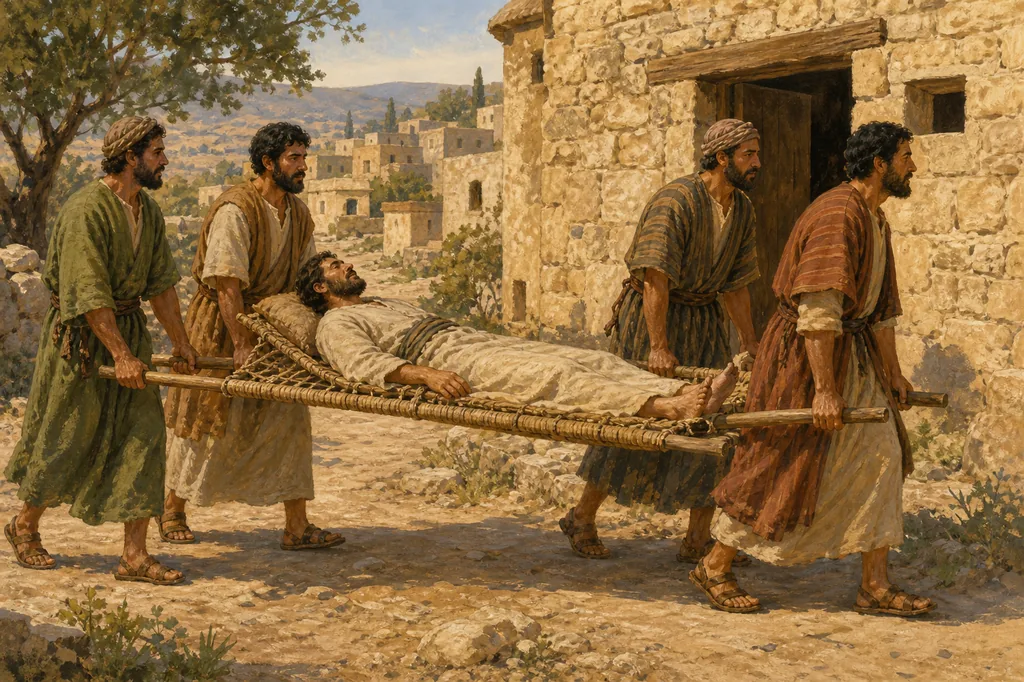
Four friends find a way through the roof
The house in Capernaum is packed. Four people arrive carrying a paralyzed man, but the crowd blocks their way to Jesus. So they open the roof and lower his mat into the room. Mark 2:1-12 gives us a healing story that begins with people making room for someone else.
Jesus first tells the man that his sins are forgiven. Some teachers present silently object: who can forgive sins except God? Jesus answers their challenge by telling the man to get up, carry his mat, and go home. He does, in front of everyone.
The scene holds forgiveness and bodily healing together. A person who arrived dependent on others walks out carrying what had carried him. Jesus identifies the visible healing as a sign of his authority to forgive.
Mark specifically mentions Jesus seeing the friends' faith. Before the man takes a step, someone else has helped him get there.
James tells the sick person to call someone
James 5:13-16 gives illness a place in the life of the church. A sick person should call the elders, who come to pray and anoint with oil in the Lord's name. James speaks confidently about the prayer of faith and the Lord raising the person up. He also connects prayer with confession and forgiveness.
The sick person is surrounded by people who take the need seriously. James places responsibility on the community to come, pray, and care. The person who is exhausted does not have to supply everyone else's confidence too.
Christians differ over how this promise relates to a particular recovery and over how anointing should be practiced. But James gives them a clear shared task: bring illness before God together. Ask your pastor or church leaders to pray with you; you do not need to wait until you have found impressive words.
A plain request is enough to begin: 'Please pray for my healing. I'm tired, and I could use someone beside me.'
Healing reaches the body and the life within it
In Matthew 8:14-17, Jesus heals Peter's mother-in-law of a fever and heals others who are sick. Matthew connects those bodily healings with Isaiah's description of the servant bearing infirmities.
First Peter 2:24-25 draws on the same servant passage with a different emphasis. It describes Jesus bearing sins, people turning from sin to righteousness, and wandering sheep returning to their Shepherd. Here, healing language describes restoration from sin and estrangement.
Jesus cares about bodies, and the salvation he brings reaches deeper than the disappearance of a symptom. Matthew describes physical recovery; Peter describes people freed from sin and brought back to God. Neither passage gives a sick reader a deadline for getting well.
You can ask God directly for relief from illness. You can also ask for courage, forgiveness, peace, and the strength to accept help. Those requests can be part of the same prayer.
Trophimus was faithful, and still ill
Near the end of 2 Timothy, amid greetings and travel details, Paul says that he left Trophimus sick at Miletus (2 Timothy 4:20). The sentence is brief. There is no accusation that Trophimus failed a test of faith.
Paul also describes asking three times for his own 'thorn in the flesh' to be taken away. The answer he receives is sufficient grace and strength in weakness (2 Corinthians 12:7-10). Paul never identifies the thorn precisely enough for us to diagnose it. The point is that even an apostle's repeated request did not end with the burden's removal.
Recovery cannot tell you how much someone trusts God. A person who remains ill needs care. Pain does not reveal someone's guilt. The Bible's healing accounts invite confidence in God's power; its accounts of continued weakness leave room for believers whose bodies have not recovered.
If that is where you are, you can keep asking for healing and tell God where your faith needs help. You do not have to pretend that the pain has stopped.
Someone still needs to carry the mat
The friends in Mark 2 have something to teach anyone praying for a sick person. They put their strength at someone else's disposal. Today that may look like a ride, a meal, help with a phone call, or company during a long afternoon.
Ask what would actually help. Keep visiting when there is no dramatic recovery story to tell. Prayer can accompany medical care; it does not require someone to abandon treatment or prove trust by going without help. That care includes support for someone living with depression.
Revelation 21:4 places complete restoration in God's promised future: death, mourning, crying, and pain come to an end. Christian hope reaches toward that future while making room for care in the present.
Bring the need to God plainly. And if you are praying for someone else, give them a reason to know they will still have your company tomorrow.
Frequently asked questions
Does being sick mean I do not have enough faith?
Illness is not a reliable measure of faith. Paul mentions leaving Trophimus sick in 2 Timothy 4:20 without blaming him, and Paul himself describes a burden that remained after repeated prayer. A sick believer needs support rather than a verdict about their faith.
What does the Bible tell us to do when someone is sick?
James 5:14-16 tells a sick person to call the church's elders to pray and anoint with oil in the Lord's name. It also calls believers to pray for one another. Asking for prayer brings the need into a community that can offer care.
Does 'by his wounds we are healed' guarantee immediate recovery?
First Peter 2:24 uses this language while discussing Jesus bearing sins and people returning to God. Matthew 8:16-17 connects Isaiah's servant passage with bodily healing too. Christians understand the relationship differently, but these verses should not be used to guarantee a recovery date or blame someone who remains ill.
Can I seek medical care while praying for healing?
Yes. Prayer and medical care can go together. Seeking appropriate treatment does not require giving up trust in God, and praying does not require stopping treatment. You can ask for healing while receiving help from clinicians and support from your church.