

The Bible calls people to trust God when they are afraid. Paul carried that trust into Corinth with trembling: he preached about Jesus while openly acknowledging his fear.
On this page
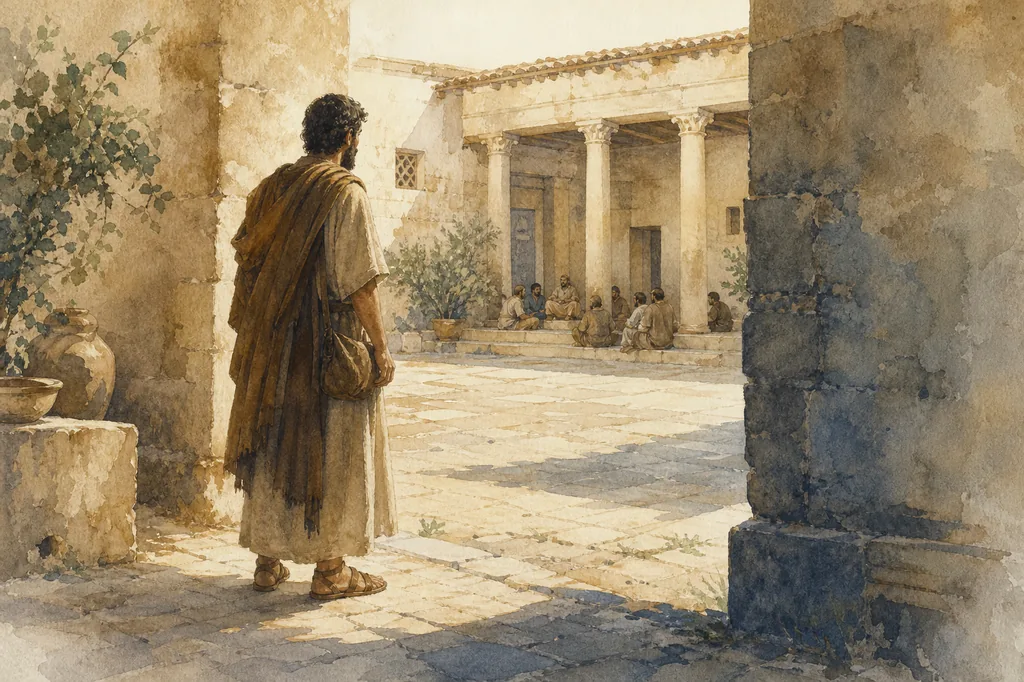
Paul did not wait until he felt fearless
Paul told the Corinthians plainly how he had felt among them. In 1 Corinthians 2:3, he remembers being with the church 'in weakness, and in fear, and in much trembling.' He chose to put that admission in a letter the whole church would hear.
The surrounding verses explain what mattered to him. He came to speak about Jesus Christ crucified, and he wanted the Corinthians' faith to rest on God's power. His delivery did not have to make him look invincible for the message to be worth hearing.
That leaves room for an ordinary kind of courage: telling the truth with an unsteady voice, asking for help before you feel composed, or doing a good thing whose outcome you cannot control. Paul's experience shows that feeling afraid and acting faithfully can happen together.
The Bible takes fear seriously because it can steer a life. Fear of someone's reaction can tempt you to lie, stay silent about harm, or turn away from a responsibility. The question is what you do with that fear, and whose word you allow to guide the next decision.
God gives frightened people someone to call on
Psalm 56 is a prayer from inside danger. The speaker describes enemies who twist his words and watch his steps, then brings his fear to God. Trust appears in the same prayer as tears and a plea for mercy.
You can pray that way without polishing the opening. Name the thing you fear: losing someone's approval, receiving bad news, facing a conversation you have postponed. Asking God for help does not require pretending the danger is imaginary. If fear also raises questions about belief, the Bible's response to doubt gives you words for that conversation.
In Isaiah 41:8-13, God addresses Israel as his servant and tells them not to fear because he is with them. He promises strength, help and support. The reassurance gives frightened people someone to rely on.
Paul faced hardship while serving God, so trust cannot be reduced to a prediction that everything will go smoothly. Scripture gives people a way to speak, ask and keep going even when they cannot see how the situation will end.
Why does the same Bible tell us to fear God?
Proverbs 9:10 calls the fear of the Lord the beginning of wisdom. Here fear includes awe before God's holiness and authority: taking him seriously enough to listen, accept correction, and change what you do. It reaches deeper than a polite nod of respect.
That kind of fear can challenge your fear of other people. If keeping someone's approval requires cruelty or dishonesty, reverence for God gives you a reason to refuse. The person you want to impress does not have the final say over what is right.
First John 4:16-19 places God's love beside confidence on the day of judgment. Its statement that perfect love casts out fear belongs in that setting. John grounds that confidence in the love God has already shown them.
Reverence and love belong together. You can take God's judgment seriously while learning to approach him as someone who loves you. A startled reaction or a difficult afternoon does not, by itself, prove that you have failed to love God.
Give courage one thing to do
Second Timothy 1:7 describes what God gives in terms of power, love and a sound mind. Read the next verse and the purpose becomes clearer: Timothy is urged not to be ashamed of testimony about Jesus or of Paul in prison, and to share in hardship for the gospel.
Timothy has work to do under pressure. Love keeps him concerned with other people; sound judgment helps him decide how to act. Loudness and recklessness are poor substitutes for either.
Start with the responsibility in front of you. Write the honest sentence you need to say. Ask a trusted friend to accompany you; Paul asked for company too. Read a passage slowly enough to notice what God actually promises, then pray about the situation you are facing.
Sometimes the wise action is to get out of danger. Proverbs 22:3 praises the prudent person who sees trouble and takes shelter. Protecting yourself or asking others for help can be an act of good judgment. You do not have to prove your faith by staying exposed to harm.
Frequently asked questions
Is feeling afraid a sin?
Feeling afraid is not automatically a sinful decision. Paul acknowledged fear in 1 Corinthians 2:3, and Psalm 56 brings fear into prayer. Scripture warns against allowing fear to rule our choices in place of trust and obedience. An honest response can begin with asking God for help.
What is a short Bible verse to pray when I am afraid?
Psalm 56:3 says, 'What time I am afraid, I will trust in thee' in the King James Version. Read it with the surrounding prayer, which speaks openly about danger and tears. You can then name your own fear and ask God for help with it.
What does a spirit of fear mean in 2 Timothy 1:7?
In context, it refers to timidity or cowardice that would shrink from faithful witness. Paul contrasts it with power, love and sound judgment, then urges Timothy not to be ashamed of the gospel. The verse encourages courage; it does not label every frightened feeling as a spiritual failure.
Does trusting God mean ignoring danger?
No. Proverbs 22:3 commends recognizing danger and taking shelter. Trust can go together with leaving an unsafe situation, seeking help, and making careful plans. Courage serves what is good; it does not require unnecessary risk.